
Show summary Hide summary
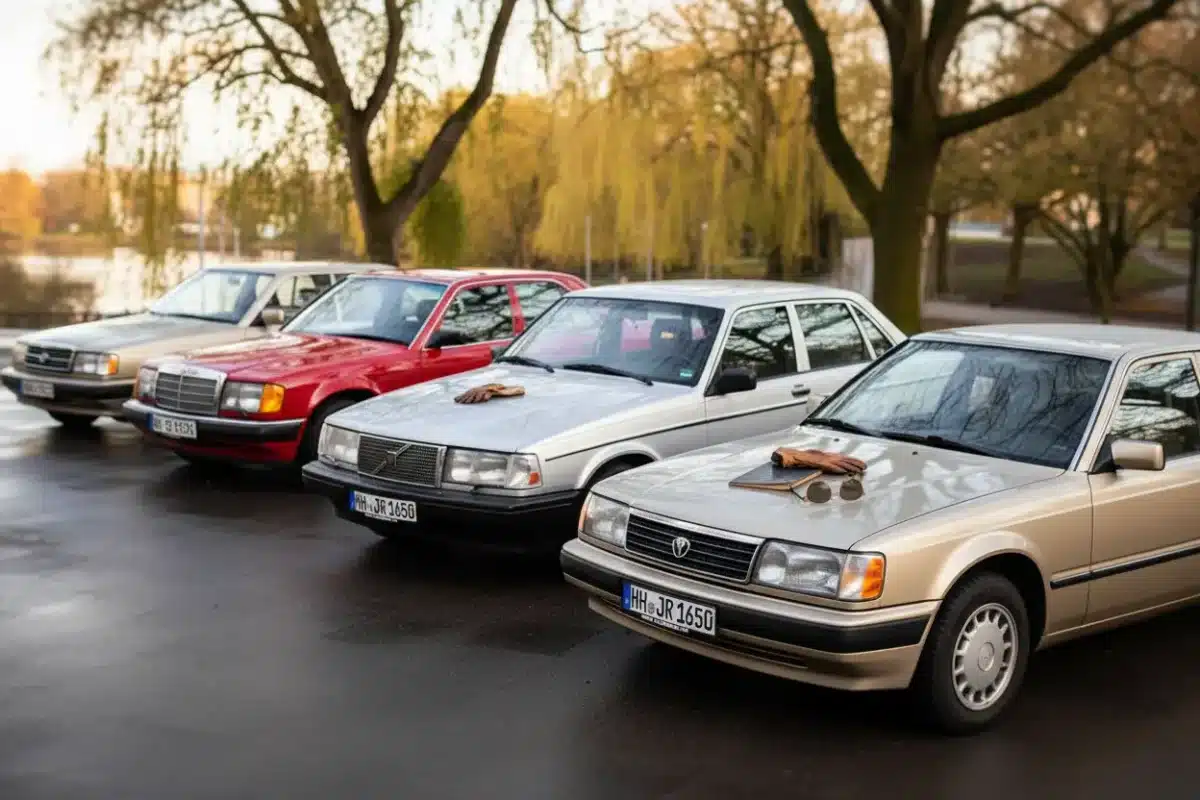
Ask any classic car fan about reliability and you’ll likely get a misty-eyed story about old Mercedes, Toyotas, or Volvos that could survive an apocalypse (and probably have). But do these icons truly trump their modern descendants? Let’s dive into the numbers, dust off our nostalgia goggles, and see what the data actually says about reliability—past versus present.
A Tale of Two Realities: Mechanical Simplicity vs. Digital Complexity
If you judge cars solely by breakdowns, the picture is… complicated. On one hand, young electric vehicles (EVs) often prove less prone to breakdowns than their gasoline or diesel peers. Why? Fewer moving parts mean fewer things to go wrong. Recent numbers highlighted by AutoWeek, referencing ADAC, actually show young EVs averaging better reliability scores than cars with traditional combustion engines. Pretty shocking, right?
But wait. There’s another side. As cars get loaded with software and driving aids (the infamous ADAS systems), we’re seeing a surge of “childhood illnesses”—mostly teething problems with electronics, not engines throwing in the towel. In fact, AutoWeek recently pointed out that the rapid shift to electrification and advanced driver assists bumps up the odds of something glitching. The catch: it’s nearly all electronic headaches, not blown head gaskets.
Elon Musk says Tesla owners can soon text and drive: rollout in a month or two
Nissan’s game-changing solar EV steals spotlight: 4 more EV stories this week
The Growing Pile of Breakdowns: Not Always What It Seems
Now, before we declare automotive doom because breakdown stats are up, look at the broader context. Raw breakdown numbers are rising partly because there are simply more—and older—cars out on the road, and we drive more often. It’s not necessarily that each car is less reliable. For instance, ANWB reported over 1.3 million roadside assistance calls in 2024 alone, or about 3,700 per day. The most stubborn culprit? The humble 12V battery. All this muddies the waters when comparing to “the good old days.” Today, we have:
- More cars and longer lifespans
- Heaps of electronics generating warning lights
- Far greater data collection on failures
So comparing modern stats directly with decades past is like racing a bicycle against a jet—context really matters.
Why the Legends Felt Indestructible (But Were They?)
Classic Mercedes, Toyotas, and Volvos built their bulletproof reputation on simplicity and generous safety margins: minimal electronics, over-engineered components, and lots of mechanical slack. In practice, fewer gadgets meant fewer things could break—a beautiful logic!
Modern cars play by different rules. Today’s models are lighter, more efficient, and packed with features. This raises the odds of tiny software bugs making themselves known. Yet, beneath that digital fuss, the core mechanical parts are usually tougher than ever. Another upside: modern cars visit the workshop far less often. The ANWB notes that the classic “major” and “minor” service routines have basically disappeared thanks to stretched maintenance intervals (up to 30,000 km or beyond), a level of convenience that car owners in the 1990s could only dream about.
Brand Myths, Lasting Realities, and Today’s Reliable Choices
There’s no denying that some brand reputations endure for very good reason. Toyota, for example, consistently scores sky-high in reliability surveys—both past and present. That’s one reason nostalgia for “old Japanese cars” is so stubbornly persistent. NU.nl put it best in their summary of a Consumentenbond survey: Japanese brands once again topped the charts for reliability.
However, don’t rush to dismiss today’s European contenders. Modern European cars aren’t inevitably weaker; most issues are software-related, often fixed by an update rather than a messy mechanical rebuild.
So, was “the past” really more reliable? Mechanically, yes—things looked simpler and had plenty of built-in strength. Fewer gadgets, less to break. But objectively, the situation is mixed. Young EVs perform impressively well, maintenance intervals have become much longer, and many issues can be solved with a quick software patch. That said, all that digital sophistication does bring a flurry of warnings and sometimes, irritations.
Smart shopping tip: when you’re car-hunting, look beyond your rose-colored glasses. Check brand and model histories, see what over-the-air support is available, compare warranty terms, and scrutinize current breakdown and user data. That’s how you buy the reliability of today—not just the feeling of yesterday.

![Elon Musk claims Tesla owners can soon 'text and drive' with upcoming features: '[Within] a month or two'](https://www.kiheigas.com/wp-content/uploads/2025/11/Elon-Musk-says-Tesla-owners-can-soon-text-and-drive-scaled.png)


