
Show summary Hide summary
Remember when the idea of a car that could sip just one liter of fuel over 100 kilometers felt right at our fingertips? Well, ten years have flown by, and that once-hopeful vision seems more like yesterday’s dream than today’s reality… or is it?
The One-Liter Car: From Daring Prototypes to Distant Dream
Let’s rewind to an era when the elusive ‘one-liter car’ was the holy grail for automotive innovators. We’re talking about the early 2010s, a time charged with the anticipation that soon, anyone could drive 100 kilometers using just a single liter of fuel. Somehow, though, what looked achievable back then now feels a bit like an old bedtime story for engineers—beautiful, inspiring, and still slightly out of reach.
Recently, Mercedes made waves by introducing the Vision EQXX, an electric sedan with more than 1,000 kilometers of range and a battery under 100 kWh. But here’s the real kicker: its efficiency. The car boasts an energy consumption of less than 10 kWh per 100 km, which is the electric-world equivalent (for those still loyal to liters) of a combustion car burning 1 l/100 km. Impressive, right?
Elon Musk says Tesla owners can soon text and drive: rollout in a month or two
Nissan’s game-changing solar EV steals spotlight: 4 more EV stories this week
A Parade of Concept Cars and Their Breaking Points
That almost magical figure conjures the legendary season of ultra-efficient prototypes. Take a look at these trailblazers:
- Volkswagen XL1: Just 0.9 l/100 km, but only 250 were ever made—and at sky-high prices.
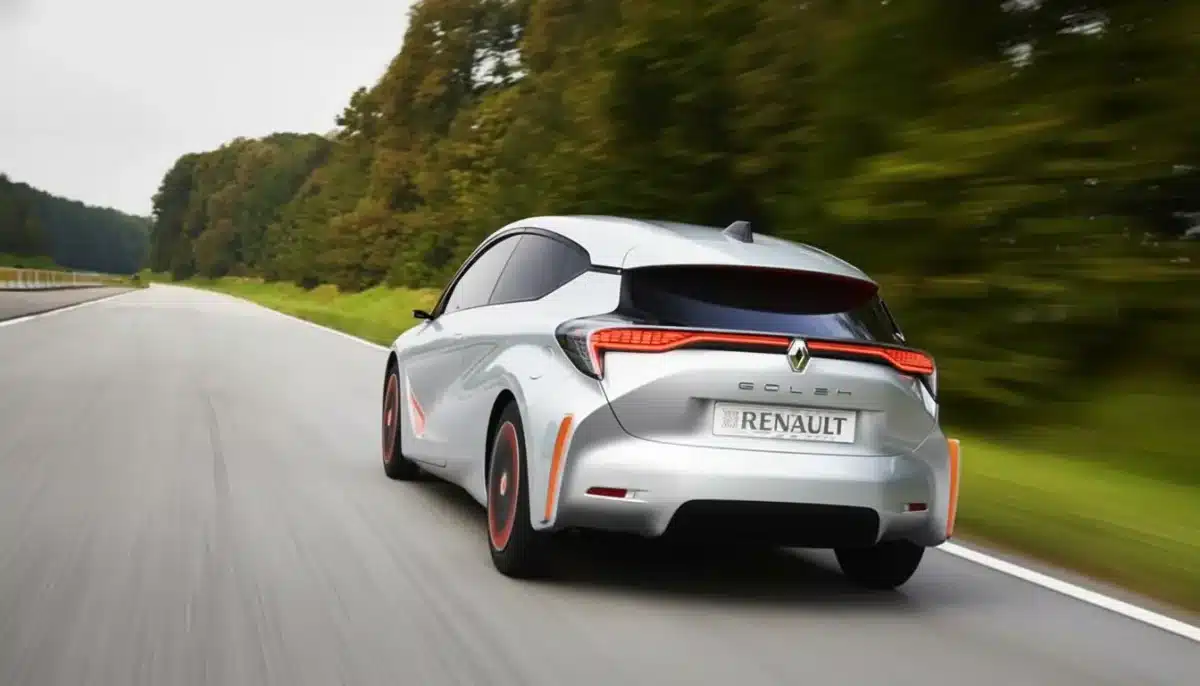
- Renault Eolab (2014): Managed a single liter every 100 km, at least on paper.
- Citroën C4 Cactus (optimized version): Still thirsty, with 2 l/100 km.
In 2012, French Prime Minister Jean-Marc Ayrault asked car makers to target 2 l/100 km by 2020. Some responded—take DS with its DS 7 Crossback E-Tense, which claims 1.3 l/100 km. But that’s where the math gets fuzzy; welcome to the land of plug-in hybrids, where electric miles are part of the calculation and not all that glitters is pure gasoline.
Hybrid Power and Real-World Hurdles
In truth, even the most famous prototypes weren’t entirely faithful to pure combustion—hybrids like the XL1 needed to plug in. In fact, a conventional engine car that genuinely achieves 1 l/100 km just has never existed outside of fantasy. Hybridization was—and still is—the magic trick to drastically reduce consumption.
The Eolab, for example, foreshadowed Renault’s E-Tech system in the 2020 Clio, but in reality, it only manages 4.3 l/100 km. The Toyota Yaris Hybrid, the class favorite, dips to 3.8 l/100 km—admirable, yet still nowhere near the “magical liter.”
Keep in mind, even these numbers are from official homologation tests, which tend to be, let’s say, a tad optimistic compared to the real world. When regulations shifted from the NEDC to the more realistic WLTP, the official figures inched closer to everyday use—making records harder and, for drivers, dreams of the one-liter car even more distant.
- Production models never cloned their concept ancestors—people refuse to buy a car as sparse as a race kart and as low as a skateboard.
- Extreme materials found in show cars just don’t make sense for mass production—unless you want a car priced like a spaceship.
And as if that wasn’t enough, SUVs invaded the market: higher, heavier, and shaped like bricks compared to streamlined prototypes. Sure, extreme aerodynamics, as with the XL1 or EQXX, remains the best path to low consumption. But try convincing anyone to cruise inches above the tarmac like they’re driving a Mazda MX-5—good luck!
From One-Liter Dreams to Electric Reality
The sad truth? The dream of a “1 liter per 100 km” ride might never come true—especially as the world shifts away from combustion engines. Today’s electric cars face a new battle: range. Buyers want to know how far they can drive on a single charge, not how many kilowatt-hours they burn every 100 km.
Over time, as more electric choices emerge and the price of energy becomes a bigger concern, direct comparisons on energy consumption will likely become the norm—just as liters of fuel once ruled the conversation. Until then, the mythic one-liter car will remain… a beautiful but unfinished chapter in car history.
So, the next time you dream about driving 100 km on just a single liter, remember: if you want the magic, you’ll have to settle for it in the legends—and, perhaps, hope the next concept car dares to chase it all over again.

![Elon Musk claims Tesla owners can soon 'text and drive' with upcoming features: '[Within] a month or two'](https://www.kiheigas.com/wp-content/uploads/2025/11/Elon-Musk-says-Tesla-owners-can-soon-text-and-drive-scaled.png)


