
Show summary Hide summary
Why I Switched Back to Gas: Drivers Speak Out on the Electric Car Dilemma
The Promise – and Reality – of Electric Dreams
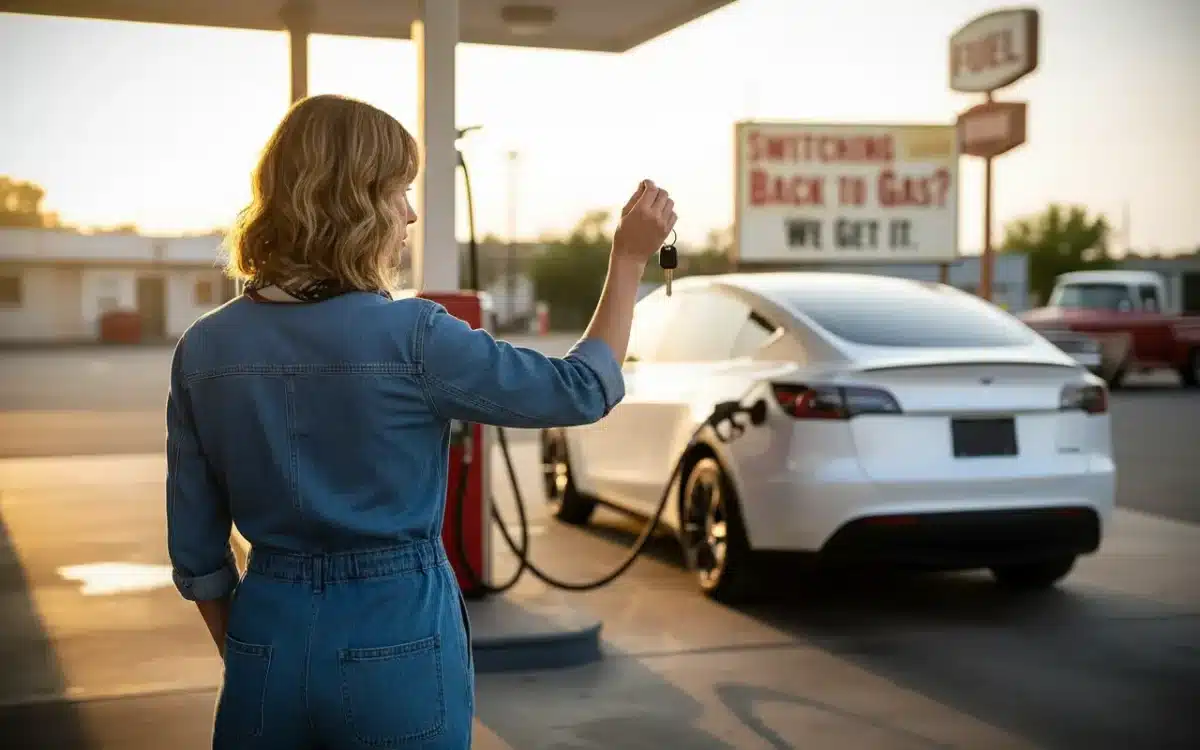
There’s something seductive about the whisper-quiet hum of an electric vehicle (EV), the instant torque, and, of course, that satisfying feeling of not spewing emissions with every kilometre. Yet, for a number of French drivers, what began as a love affair with electricity soon ran headlong into the brick wall of daily life. Their initial enthusiasm met practical difficulties and the infamous ticking clock, driving some of them back into the arms – or hoods – of traditional combustion engines. As it turns out, compatibility between technology and lifestyle isn’t just a bonus: it’s the main event.
Charging Headaches: The Biggest Roadblock
Take Stella in Toulon, a restaurateur whose eco-soul led her straight to a BMW i3. She didn’t want to make a scene; she just wanted to reduce her environmental impact. What she got instead, in the absence of a home charger, was an obstacle course. “Public charging stations? Often broken or already in use,” Stella shares. A single trip to Aix-en-Provence turned into a masterclass on patience: 40 minutes lost to a defective charger, followed by a frantic hunt for another working one. The months rolled by in a haze of range anxiety. In the end, she sold the EV and bought a small petrol car, balancing disappointment and relief like a true pro.
Elon Musk says Tesla owners can soon text and drive: rollout in a month or two
Nissan’s game-changing solar EV steals spotlight: 4 more EV stories this week
Stella’s not alone. For Christophe, a commercial manager who was handed a Tesla Model Y as his company car, electric driving became a logistical puzzle. Without home charging, he faced 30–35 minute Supercharger stops two to three times a week, with every journey planned like a military operation and a margin for safety to avoid getting stranded. The result? About two hours lost each week – time his work schedule simply didn’t allow. His conclusion is blunt: “At my next assignment, I’ll go back to combustion. It’s not about technology, but about time.”
Then there’s Claire, a nurse in Haute-Corse dedicating her days to rural stretches, clocking 150–200 km daily in her Renault Zoe. It was meant to be a modern, economical choice. The dream faltered when battery exhaustion left her stranded twice, once at night on a remote road – giving ‘rural adventure’ a whole new (and terrifying) meaning. Even with planning apps and careful organization, real-world range didn’t hold up: “Cold, hills, heating… everything eats into it fast.” After a year, she swapped the Zoe for a compact diesel: “My job is stressful enough without having to battle my car.”
The Crucial Difference: Charging at Home
The stories share a common culprit: public charging. Uncertain availability, frequent breakdowns, long waits, and confusing payment systems present a daily minefield. Those with home charging, meanwhile, live a far less complicated existence. Stéphane is a case in point: he powers his Tesla Model 3 from home, thanks to solar panels, and reports “ridiculously low” running costs – about €1.50 per 100 km – and a peaceful, enjoyable drive. His neighbor Vincent backs him up: “The initial investment pays off. I’d never go back.”
Not One Size Fits All: Key Lessons for 2025 and Beyond
- Lack of public charging and infrastructure issues are decisive dealbreakers for many drivers.
- Having a home charger dramatically changes the EV experience, tipping it from complicated to convenient.
- 2025 is shaping up to be a pivotal year: rising electricity prices and sluggish network expansion (stuck at around 160,000 charging points in France) are dampening confidence. Car makers target models with 500+ km ranges, yet prices remain high.
The collected experiences share a clear message: the EV is no universal solution. It works when infrastructure, the car’s practical specs, and personal habits march in step. Extending test drives before signing a contract – as suggested by dealers and manufacturers – could spare buyers the pain of remorse and premature retreat.
So, before plug meets socket, remember: sometimes the right charge is the one that actually fits your life.

![Elon Musk claims Tesla owners can soon 'text and drive' with upcoming features: '[Within] a month or two'](https://www.kiheigas.com/wp-content/uploads/2025/11/Elon-Musk-says-Tesla-owners-can-soon-text-and-drive-scaled.png)


