
Show summary Hide summary
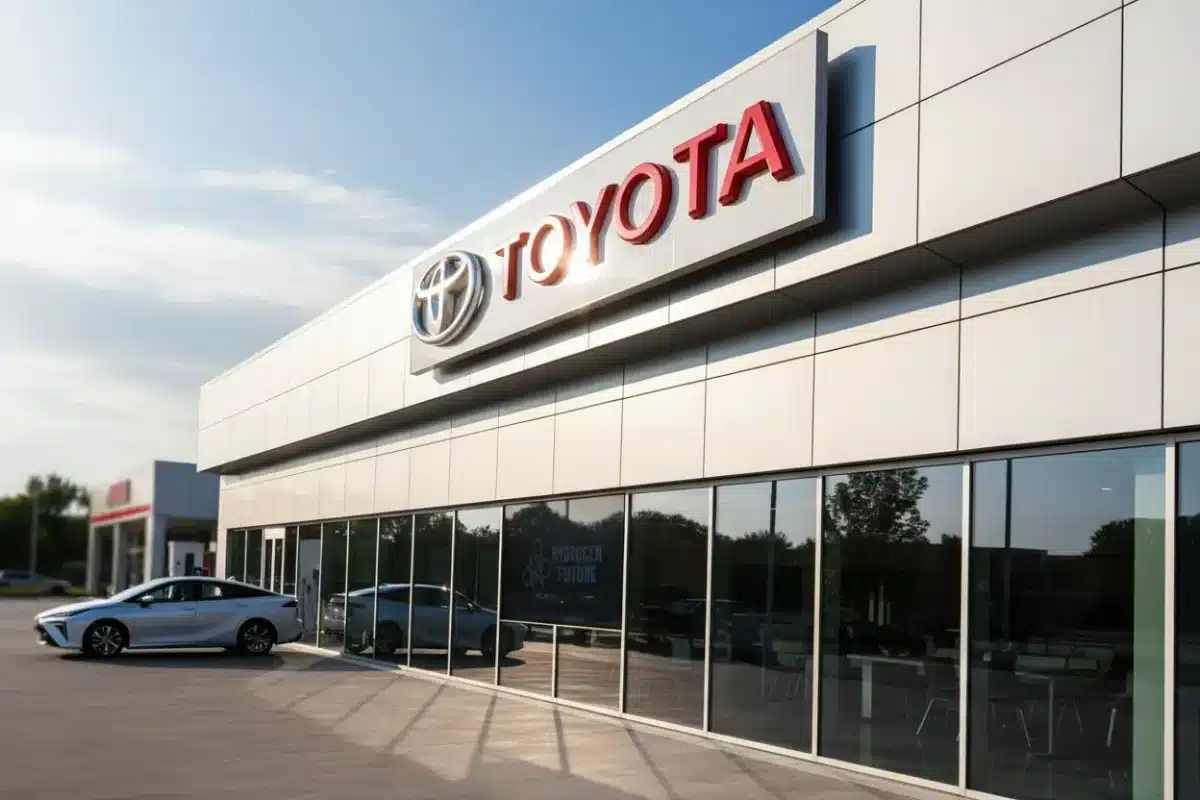
No, hydrogen isn’t heading for the exit at Toyota. In fact, it’s very much taking center stage for the next act. If you thought the age of hydrogen-powered cars was fizzling out, Toyota’s latest playbook reads more like a science-fiction sequel: more tech, more choice, and not a single goodbye in sight.
Toyota’s Strong Commitment: Multipath Means More Than Just Batteries
Toyota recently clarified a hot topic: rumours had circulated that the automaker was dropping hydrogen from its clean-tech stable. Let’s put that to rest—Toyota is doubling down, not pulling out. The company’s strategy is firmly rooted in a multipath approach. Here, battery-electric vehicles (BEVs), hydrogen, and other innovative technologies stand shoulder to shoulder, each playing a crucial role in shaping the brand’s vision of the future.
So, what’s actually on Toyota’s roadmap? Think less of either/or, more of all/and. Hydrogen isn’t just alive—if you listen closely, you might hear it humming quietly under the hood, ready for the long haul.
Elon Musk says Tesla owners can soon text and drive: rollout in a month or two
Nissan’s game-changing solar EV steals spotlight: 4 more EV stories this week
The Third Generation Fuel Cell System: Smaller, Smarter, Stronger
Hydrogen continues to be a key player in Toyota’s grand plans. The latest star of their lineup is the third generation fuel cell system. This is no ordinary update—it’s a more compact package, with 20% higher efficiency than its predecessor, and designed to last for up to one million kilometers. That’s the sort of mileage that would get even the most seasoned taxi driver grinning.
Toyota took center stage at the Paris 2024 Olympic Games to show off this new tech. The system made an appearance not just in snappy sports cars but in a practical parade of vehicles—buses and heavy trucks included. A bold move that answers the question: “But is it ready for the real world?” with a firm nod.
Hydrogen’s Sweet Spot: Heavy Transport & Motorsport Action
The biggest opportunity for hydrogen, according to Toyota, is in the heavy transport sector. Here’s why:
- Quick refueling: Time is money, especially for trucks. Hydrogen fuel cells get vehicles back on the road in a flash.
- Heavy loads: These vehicles need muscle, not just mileage—and hydrogen delivers that, too.
To push this vision from blueprint to blacktop, Toyota is partnering with players in Europe to roll out an efficient and cost-effective hydrogen infrastructure. It’s all part of creating a viable alternative for heavy transport, not just city driving.
The hydrogen story doesn’t stop at cargo and commuters. Motorsport fans, take note: hydrogen is making waves there, too. Through Toyota Gazoo Racing and Rookie Racing, Toyota is turbocharging the development of hydrogen-combustion engines—recently showcased in events like the 24-hour Super Taikyu race. It’s not just a demo; it’s proof that hydrogen has the heart for high-performance.
Batteries Still Matter: Toyota’s Dual Investment Strategy
Meanwhile, Toyota isn’t putting its batteries on the backburner. The company has a firm hand in conventional lithium-ion batteries, and—always looking ahead—is charging forward with solid-state battery research. These promise a leap in energy density and significantly shorter charging times—attributes designed to make BEVs even more appealing for everyone, not just the early adopters.
This dual investment strategy (batteries and hydrogen) is at the core of Toyota’s mission: to bring down emissions for every category, from nimble city cars to brawny freight haulers.
- Battery-electric vehicles
- Hydrogen fuel cell vehicles
- Hybrids
- Alternative fuels
These aren’t just R&D side projects. Together, they form a broad palette of technologies that Toyota is betting on for a climate-neutral future.
In an era where some headlines predicted a farewell to hydrogen, Toyota’s message is clear: the hydrogen dream is alive, kicking, and now part of a wider portfolio than ever before. Their approach is as flexible and customer-oriented as it gets, aiming to lower emissions worldwide—no matter if you’re behind the wheel of a city runabout or a massive truck hauling precious cargo. So, the next time someone suggests Toyota is abandoning hydrogen, you can confidently tell them: not only is it not dead, it just might outlast us all.

![Elon Musk claims Tesla owners can soon 'text and drive' with upcoming features: '[Within] a month or two'](https://www.kiheigas.com/wp-content/uploads/2025/11/Elon-Musk-says-Tesla-owners-can-soon-text-and-drive-scaled.png)


