
Show summary Hide summary
European carmakers may want to pinch themselves: while most glide confidently toward strict emissions targets, Mercedes-Benz is in danger of being rudely awakened. As China sprints ahead in electric mobility, fresh analysis sounds the alarm—this is no time for Europe to snooze at the wheel.
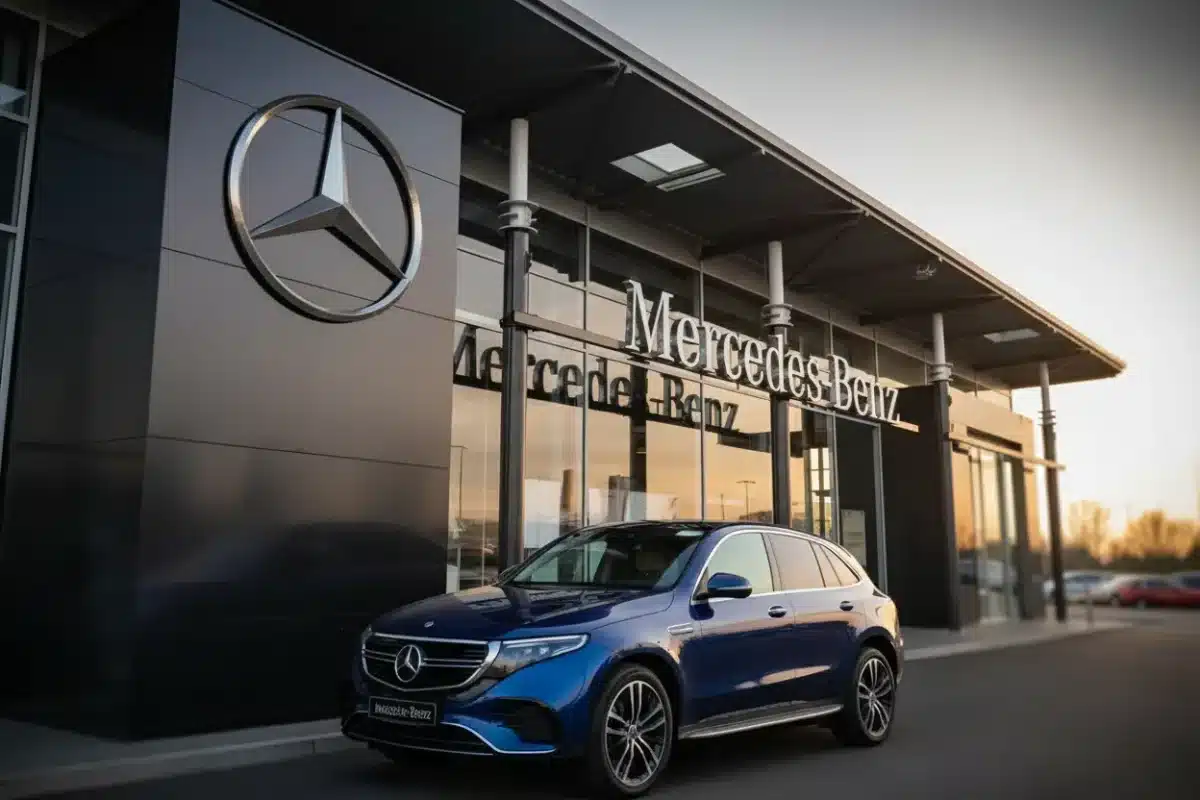
Mercedes-Benz: Alone at the Crossroads
A recent analysis by Transport & Environment (T&E) paints a striking picture. Nearly every European automaker is apparently on track to meet their carbon dioxide (CO₂) reduction goals for 2025 to 2027—except for Mercedes-Benz. Far from a minor misstep, Mercedes is expected to exceed the allowed CO₂ emissions by an average of ten grams per kilometer.
Meanwhile, rivals like BMW, Renault, Stellantis, and Volkswagen are either comfortably within EU rules, or have emissions well below the set threshold. Such performance leaves Mercedes isolated, and facing an unpalatable choice to avoid sky-high fines: turning to CO₂ pooling. In other words, Mercedes will likely buy emissions rights from companies such as Volvo Cars or Polestar. Not quite the badge of progress they might wish to display on their grille.
Elon Musk says Tesla owners can soon text and drive: rollout in a month or two
Nissan’s game-changing solar EV steals spotlight: 4 more EV stories this week
Deadlines Delayed, Pressure Deflated?
The irony? Mercedes finds itself in this pickle even though the industry has been granted extra time. The European Commission originally set the deadline at 2025 but recently shifted it to 2027—a delay warmly embraced by the sector. Still, critics grumble that this leniency is hobbling the electric car transition and putting climate goals at risk. The message: two years extra is a gift, but it’s no excuse to relax.
Despite wider industry breathing room, pressures remain critical. T&E emphasizes that reducing momentum now could be disastrous for Europe’s competitive edge in electric mobility. Director Lucien Mathieu puts it bluntly: “If you think China will stop innovating, you’re living in a dream world. If Europe keeps delaying, we’ll lose even more ground in a crucial industry.”
EV Sales Surge—But at What Cost?
The good news is hard to ignore. Electric vehicle sales in Europe are growing steadily. In the first half of 2025, sales of battery electric models jumped by 38 percent. Yet there’s a price to procrastination: T&E expects that due to the deferred regulations, up to two million fewer EVs could be sold between 2025 and 2027. The reason? The price gap between EVs and traditional combustion engine cars, which yawns as wide as 30 to 40 percent.
Still, not all trends are cause for hand-wringing. Battery prices are falling faster than anyone expected—an estimated 27 percent drop by the end of 2025, and another 28 percent by 2027. The charging infrastructure is also keeping pace: 77 percent of European highways are now covered, and almost every member state has already met or exceeded its targets for 2025. The wind, as they say, is at the back of the EV movement.
China, Competition, and the Clock Ticking
Looking east, the challenge is fierce. China now boasts a market share of more than 30 percent for battery electric vehicles (BEVs), and countries like India, Mexico, and Thailand are ramping up efforts in electrification, too. Europe, without ambitious targets, risks falling behind in the global race. T&E warns that this is no time to take the foot off the accelerator—competition waits for no one.
- Nearly all European carmakers are set for CO₂ goals—except Mercedes-Benz.
- Mercedes is, for now, alone in exceeding emissions limits by about ten grams per kilometer.
- Most major competitors are already compliant or outperforming targets.
- Postponed deadlines reduce industry pressure, but bring risks for climate ambitions.
- EV sales are surging, yet price gaps and delayed rules may slow overall adoption.
- Battery costs are dropping rapidly, and highway charging coverage is strong.
For Mercedes-Benz, the message is sobering: while tumbling battery costs and an expanding charging network offer serious support, the wider industry lull pressures no one to hurry. Yet as T&E is keen to remind everyone, this is precisely the moment to stay the course toward zero-emission mobility.
In short? If you think Europe can afford to hit the snooze button while China sets the alarm, dream on.

![Elon Musk claims Tesla owners can soon 'text and drive' with upcoming features: '[Within] a month or two'](https://www.kiheigas.com/wp-content/uploads/2025/11/Elon-Musk-says-Tesla-owners-can-soon-text-and-drive-scaled.png)


