
Show summary Hide summary
Every winter, tens of thousands of drivers confidently set off with summer tires still on their cars. After all, if there’s no snow, what’s the worst that could happen, right? Well, buckle up—because driving on summer tires once the temperatures tumble could be the single most dangerous mistake you’ll make on the roads this year. The real risks might surprise you, and no, you don’t need a blizzard to find yourself in trouble.
Summer Tires in Winter: The Risk Lurking Beneath the Surface
A huge number of motorists see no issue with braving winter roads on their trusty summer tires—especially if the landscape isn’t buried under a blanket of snow. Yet, there’s a hidden danger here, one that’s far too often underestimated. The moment temperatures drop or there’s even a drizzle of rain, summer tires start losing grip. The consequence? Braking distances suddenly become alarmingly long.
What most don’t realize is that summer tires are made from a harder rubber compound, designed to perform at their best when it’s warm and dry. However, drop that thermometer below seven degrees Celsius, and this so-called rubber takes on the texture and feel of—well—plastic. The result? Less friction, less control, and a dramatic rise in the risk of slipping or skidding, sometimes when you least expect it.
Elon Musk says Tesla owners can soon text and drive: rollout in a month or two
Nissan’s game-changing solar EV steals spotlight: 4 more EV stories this week
The Shocking Science: Longer Braking and Less Control
It’s not just speculation—the numbers spell it out clearly. Tests by ADAC and Bridgestone have shown that at 5°C on wet roads, the braking distance of a car with summer tires is on average 15 to 30 percent longer than a car with winter tires. To put it bluntly, if your car would usually come to a halt after 35 meters, you’ll now need about 45 meters to stop if you’re riding on summer tires. In those critical moments—braking suddenly for a cyclist darting out, or an animal crossing the road—that’s the kind of difference that separates a close shave from a collision.
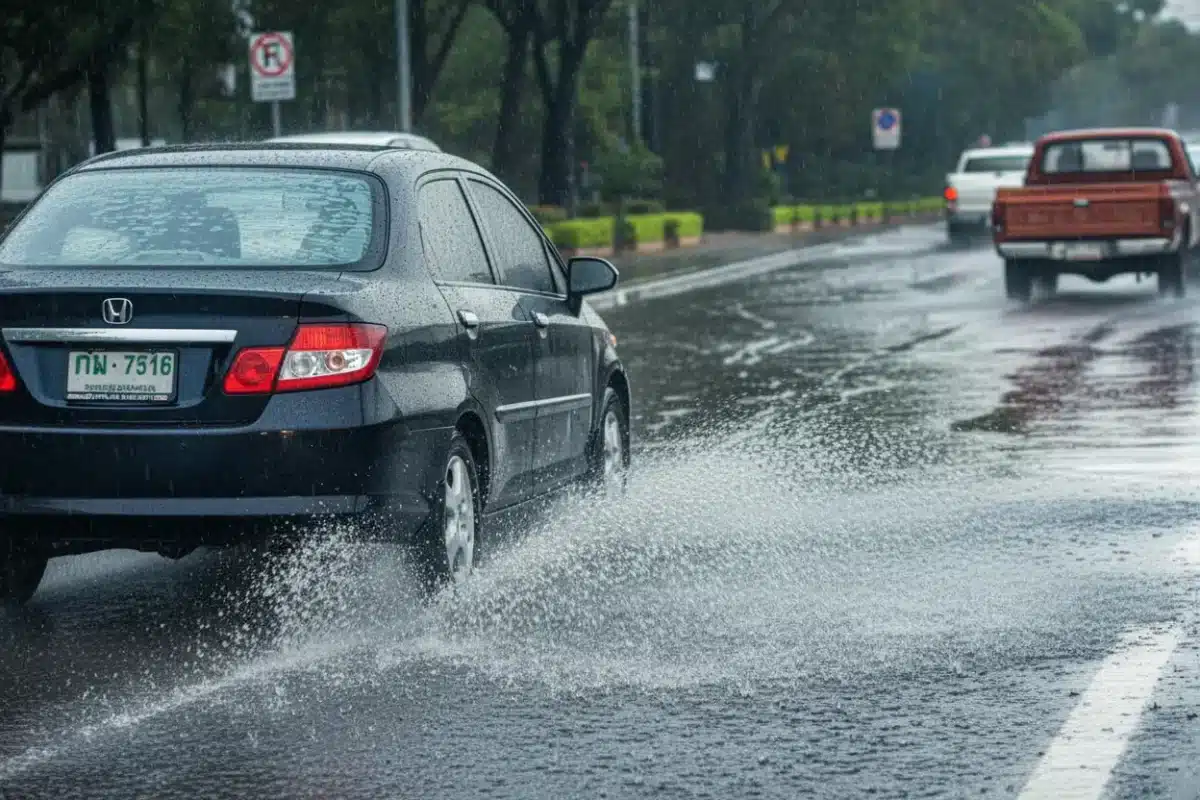
Surprisingly, most accidents involving summer tires don’t occur on snowy roads. Instead, the real danger is on cold, wet highways. The hard rubber of summer tires struggles to channel away water, significantly increasing the likelihood of aquaplaning.
Water Woes: Hidden Hazards on Chilly Roads
According to TÜV Süd measurements, summer tires at 5°C flush away up to 30 percent less water compared to how they perform at 20°C. At speeds above 80 kilometers per hour, it’s possible for your tires to momentarily lose contact with the road surface altogether. If you need to brake or steer at that critical moment, your control over the vehicle all but disappears.
You might assume that winter tires are only necessary when the forecast calls for snow. But let’s clear that misconception up once and for all—the real dangers often arise on days of cold rain, roads slick with wet leaves, or early morning frost. Even when the surface looks dry, it might have a greasy film that your summer tires struggle to grip. That false sense of security? It’s just out to trip you up.
- At 5°C, braking on wet roads takes 15–30% longer with summer tires than with winter tires
- Most accidents with summer tires happen on cold, wet highways, not snowy ones
- Summer tires at low temperatures flush away up to 30% less water, upping aquaplaning risks
- Many drivers wrongly believe winter tires are only for snow-covered roads
Choosing Safety: How to Protect Yourself (and Others)
If your goal is to stay safe on winter roads—and, honestly, whose isn’t?—your best bet is to swap out those summer tires for winter tires, or at least all-season tires with the three-peak mountain snowflake (3PMSF) symbol. Not only will your car be better equipped to handle whatever winter throws at you, but you’ll often be sure you’re meeting legal requirements if you travel in countries where winter tires are mandatory.
The bottom line is refreshingly simple: as long as it’s warm and dry, summer tires do the job. But let the temperature drop and the road get wet, and suddenly, what was once reliable becomes a hidden hazard. This risk quietly accompanies thousands of drivers each winter—most of them blissfully unaware until it’s too late.
So, the next time winter rolls around, don’t just hope for the best: make the smart choice before you hit the road. Your safety (and that of everyone else on the highway) just isn’t worth the risk.

![Elon Musk claims Tesla owners can soon 'text and drive' with upcoming features: '[Within] a month or two'](https://www.kiheigas.com/wp-content/uploads/2025/11/Elon-Musk-says-Tesla-owners-can-soon-text-and-drive-scaled.png)


