
Show summary Hide summary
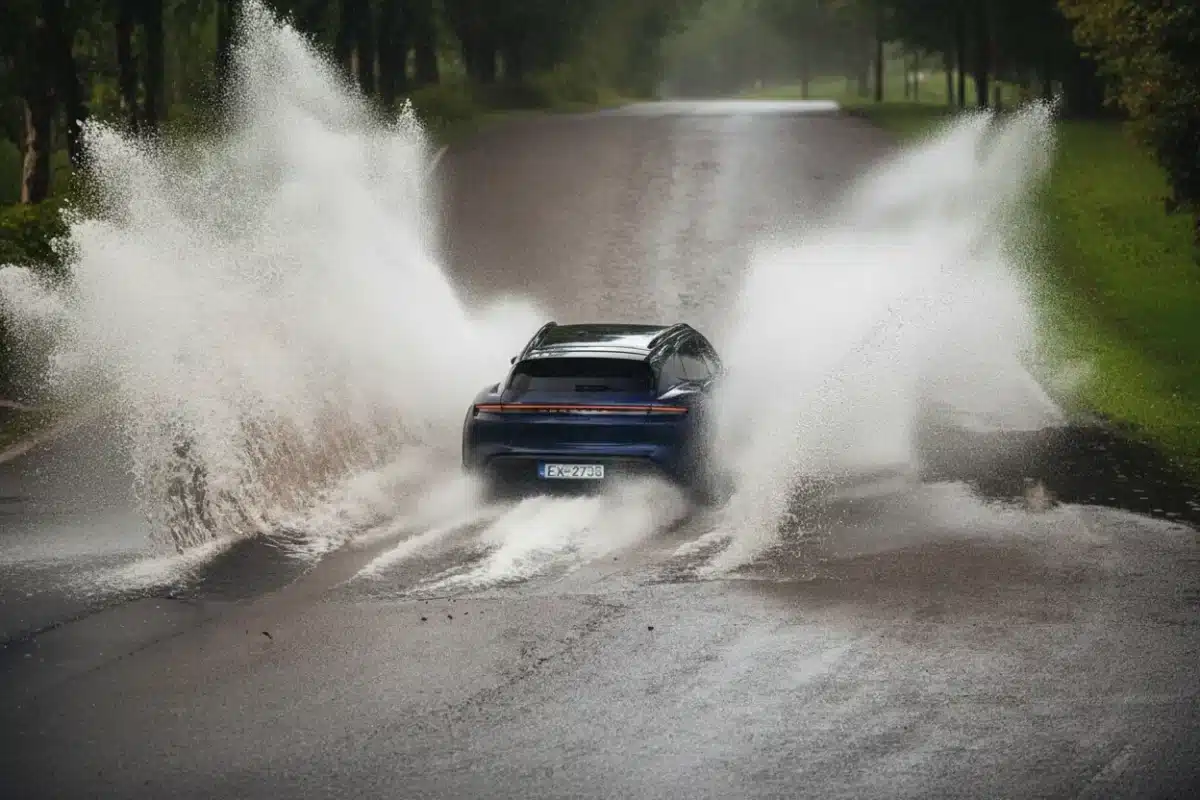
Picture this: rain is pouring, puddles are everywhere, and you’ve got a shiny electric car. The million-euro question hits you—are you really safe wading through wet streets with an EV? Let’s cut to the chase: yes, you can. But before you leap for joy and drive through a canal, know that this yes comes with some fine print. There are real risks and limits every driver should know.
Safety Regulations: No, You Won’t Get Zapped
All electric cars sold in Europe have to play by some strict rules. Standards like UNECE R100 and ISO 6469 demand that high-voltage systems are fully sealed off from the outside world, making them waterproof and capable of handling rain, puddles, or even a car wash. So, rest easy—electrocution isn’t going to be your headline issue. Your EV won’t suddenly turn into a mobile lightning rod if you hit a splashy patch.
The Real Dangers: It’s The Road, Not The Car
But—and it’s an important but—the real hazards are traditional, tried-and-tested road risks. Think aquaplaning, losing grip, and losing control. Yes, just like with conventional petrol or diesel cars, sliding out or skimming across standing water is tricky business. That’s why road safety experts repeat the same mantra: in wet weather, keep a bigger space between you and the next vehicle, brake more gently, and stay sharp when you see deeper puddles.
Elon Musk says Tesla owners can soon text and drive: rollout in a month or two
Nissan’s game-changing solar EV steals spotlight: 4 more EV stories this week
Now, here’s a fun fact from AutoWeek’s Cornelis Kit: there’s no official universal limit for how deep’s too deep for EVs (or any car, for that matter). It all depends on the make and model. A Land Rover Defender, for example, can wade through up to 90 centimeters, but don’t try that with your average family car—it just won’t make it. Same story for electric vehicles: they can handle some, but certainly not all, wet adventures. Spoiler: they’re not invincible supersubmarines.
Hidden Hazards Under the Surface
There’s more lurking beneath the waves—or, well, beneath the flooded street. The ANWB (think: the Dutch AA) reminds us that what we can’t see can definitely hurt us. Overflowing sewers and loose manhole covers are an ugly reality in a flood. You could unwittingly drop a wheel into a hole, or even suffer serious car damage when a cover knocks the underside of your ride. Fun? Not so much.
- Aquaplaning and losing control are bigger risks than electric shock.
- Invisible hazards include hidden holes and displaced manhole covers.
Let’s add another twist: cars with combustion engines have a real Achilles’ heel when it comes to water. If water gets in through the air intake while the engine’s running, the engine could end up ruined beyond repair. That’s why, if you’re driving a non-EV and you notice the water is getting high, the ANWB says to turn off the engine pronto.
But what about electric vehicles, those silent, air-intake-free marvels? They sidestep the air intake drama, but they’re not immune to water. As Cornelis Kit points out, critical electronics like the 12-volt battery and the main control unit are under the hood and still vulnerable. If these get wet, your EV can stall just as easily as its gas-powered cousins in deeper water.
How To Cross Flooded Roads—If You Really, Absolutely Must
Found yourself with no other way but to brave a submerged stretch? Take it slow, drive straight, and avoid any wild steering or sudden acceleration. Don’t tail behind trucks—those big splashes and waves won’t do your EV any favors. Once you’re through, carefully test your brakes to help them dry out.
If, despite your best efforts, your car conks out mid-flood, safety first: get out (safely, please) and call for roadside help. Don’t try to restart your car or plug it in for charging. Manufacturers, including Tesla, make it crystal clear: only after a specialist has checked the system should the car be driven or charged again.
Plugging in your EV during a downpour? Good news: no problem, as long as the charging station and cables are approved and in good shape. The systems are built to handle rain and splashes. But—really, you saw this coming—never try to charge if the equipment has been underwater or looks damaged.
Conclusion: Smart Choices Keep You And Your EV Out of Trouble
Electric cars are every bit as safe in wet weather as regular fuel cars—sometimes safer, given no air intakes to worry about. The main enemies are aquaplaning, hidden dangers beneath the water, and potential damage to the electronics or (in conventional cars) to the engine. The recipe for safety?
- Drive slowly
- Avoid deep puddles when you can
- Stop if things start to go wrong
Keep these tips in mind and you’ll keep both yourself and your beloved EV high and dry—even when the weather refuses to play along. Stay sharp, drive smart, and embrace the wet without worries!

![Elon Musk claims Tesla owners can soon 'text and drive' with upcoming features: '[Within] a month or two'](https://www.kiheigas.com/wp-content/uploads/2025/11/Elon-Musk-says-Tesla-owners-can-soon-text-and-drive-scaled.png)


